
Why Your Child Keeps Making Careless Mistakes: Insights from Woodlands Tuition Teachers
“My child knows how to do it, but keeps making careless mistakes.”
If you’ve ever said this—whether in frustration, confusion, or quiet despair—you’re far from alone. It’s one of the most common concerns we hear from parents at our tuition centre in Woodlands. Your child studies hard, understands the concepts, and can solve problems correctly at home. Yet when the test paper comes back, marks are lost to errors that seem entirely avoidable: a misread number here, a forgotten unit there, a sign that mysteriously changed from positive to negative.
The truth is, what we casually label “careless mistakes” are rarely about carelessness at all. These errors follow predictable patterns, stem from identifiable causes, and—most importantly—can be significantly reduced with the right strategies. In this comprehensive guide, we’ll share insights from experienced primary school tuition teachers in Woodlands on why these mistakes happen and exactly what you can do to help your child overcome them.
The Myth of “Carelessness”: Understanding What’s Really Happening
Before we can solve the problem, we need to reframe how we think about it. The term “careless mistake” implies that your child simply didn’t care enough or try hard enough. This framing is not only inaccurate but can actually be harmful, making children feel that the solution is simply to “be more careful”—vague advice that’s nearly impossible to act upon.
In reality, most so-called careless mistakes fall into specific categories with specific causes. Researchers in educational psychology have found that these errors typically result from cognitive overload, underdeveloped automaticity, weak metacognitive skills, or environmental and emotional factors. None of these causes have anything to do with how much your child cares about doing well.
When we understand the true nature of these mistakes, we can address them systematically rather than simply telling our children to “check your work” or “be more careful next time.”
The Six Types of “Careless” Mistakes
Through years of marking student work and analysing error patterns, teachers at primary school tuition centres in Woodlands have identified six distinct categories of mistakes that get lumped under the “careless” label. Understanding which types affect your child is the first step toward targeted improvement.
Type 1: Misreading Errors
These occur when students misread information in the question. They might see “54” instead of “45,” read “more than” as “less than,” or miss a crucial word like “not” or “except.” Misreading errors are particularly common in subjects like Math and Science, where a single misread number changes the entire problem.
These errors often increase when questions are text-heavy or when students are rushing. They’re also more frequent among children who haven’t developed strong active reading habits—those who skim rather than carefully process each word.
Type 2: Transcription Errors
Even when students read the question correctly, they may copy information incorrectly onto their working. A student might read “347” in the question but write “374” in their calculation. Similarly, when transferring answers from rough work to the answer space, numbers can get jumbled or digits dropped entirely.
Transcription errors spike when handwriting is messy or rushed, when students work in cramped spaces, or when there’s a lot of back-and-forth between the question paper and answer sheet.
Type 3: Procedural Slip-Ups
These are errors in executing mathematical procedures that the student actually knows well. Examples include forgetting to carry over in addition, misaligning place values in multiplication, making sign errors in operations with negative numbers, or skipping a step in a familiar algorithm.
Procedural slip-ups often occur with operations that have become “automatic” but aren’t quite automatic enough. The student’s conscious mind moves ahead to the next step while their hand is still executing the current one, resulting in incomplete or incorrect execution.
Type 4: Memory Retrieval Errors
Sometimes students retrieve the wrong fact from memory—writing that 7 × 8 = 54 instead of 56, or recalling an incorrect formula. These aren’t gaps in knowledge; the student knows the correct fact but accidentally retrieves a similar but wrong piece of information.
Memory retrieval errors are more common when students are tired, stressed, or working under time pressure. They’re also more frequent for facts that are similar to other facts (like multiplication tables for 6, 7, and 8, which many students find confusingly similar).
Type 5: Attention Drift Errors
These mistakes happen when a student’s focus momentarily lapses mid-problem. They might start solving for one thing, lose track of what they were doing, and end up answering a different question entirely. Or they might complete most of a multi-step problem correctly, then inexplicably skip the final step.
Attention drift is particularly problematic during long papers or when working on questions that don’t feel engaging. It’s not that students can’t focus—it’s that sustained attention is a skill that requires development.
Type 6: Final Answer Errors
Students sometimes do all the work correctly but make mistakes in presenting their final answer. They might forget units, give the answer in the wrong form (decimal instead of fraction), fail to round as instructed, or answer only part of a multi-part question.
These errors often stem from students feeling relieved that they’ve “solved” the problem and rushing through the final presentation without the same care they applied to the calculation itself.
The Hidden Causes Behind Persistent Errors
Understanding the types of mistakes is helpful, but to truly address them, we need to examine why they keep happening. Here are the deeper factors that our Woodlands tuition teachers have identified.
Cognitive Overload
Working memory—the mental “workspace” where we hold and manipulate information—has limited capacity. When a problem requires a student to hold too many pieces of information simultaneously, something gets dropped. This is why errors increase with problem complexity, even when students understand each individual component.
Students who haven’t fully automated basic skills (like times tables or spelling) use up working memory on these fundamentals, leaving less capacity for higher-order problem-solving. This is one reason why drilling basics to automaticity matters so much.
Insufficient Automaticity
When skills aren’t fully automatic, they require conscious attention to execute. A student who has to think about each step of long division has little mental energy left to monitor for errors. In contrast, a student for whom the procedure is automatic can devote attention to checking their work as they go.
Building true automaticity takes more practice than most students get in school alone. This is where consistent, focused practice—whether at home or through tuition—makes a significant difference.
Weak Metacognitive Skills
Metacognition—thinking about one’s own thinking—is crucial for catching errors. Students with strong metacognitive skills naturally monitor their work, notice when something doesn’t “feel right,” and pause to verify. Students with weaker metacognitive skills plow ahead without this internal checking process.
The good news is that metacognition can be taught and developed. It’s one of the most valuable skills that quality primary school tuition in Woodlands can cultivate.
Test Anxiety and Pressure
Anxiety doesn’t just feel unpleasant—it actively impairs cognitive function. Stress hormones interfere with working memory and attention regulation, making all types of errors more likely. A child who rarely makes mistakes during relaxed practice at home may make many more under exam conditions.
This is why simulating exam conditions during practice is important. Students need to build comfort with the pressure environment, not just the content.
Physical and Environmental Factors
Never underestimate the impact of physical state on mental performance. Students who are tired, hungry, unwell, or uncomfortable make more mistakes. Environmental distractions—noise, visual clutter, uncomfortable seating—also take a toll on focus and accuracy.
These factors are often overlooked, but addressing them can yield immediate improvements in error rates.
Effective Checking Techniques That Actually Work
“Check your work” is advice so common it’s almost meaningless. What students need are specific, teachable checking strategies. Here are the techniques that teachers at tuition centres in Woodlands have found most effective.
The Fresh Eyes Method
After completing a problem, students should move to the next question rather than immediately checking. Once they’ve finished the paper (or a section), they return to check with “fresh eyes.” This mental break helps them see errors they’d miss if checking immediately after solving.
For this to work, students must budget time for checking—typically the last 10-15 minutes of an exam. This requires practice with pacing during preparation.
The Cover-and-Redo Technique
For high-stakes questions worth many marks, students should cover their original working and redo the problem from scratch. If they get the same answer, it’s likely correct. If they get a different answer, they know to investigate further.
This technique is time-consuming but highly effective for important questions where accuracy matters most.
Reverse Verification
Where possible, students should verify answers by working backwards. In math, this might mean plugging the answer back into the original equation. In science, it might mean checking if the answer makes logical sense given what the question described.
Teaching students to ask “Does this answer make sense?” catches many errors that pure calculation checking misses.
The Line-by-Line Check
Rather than scanning completed work generally, students should systematically check each line against the line above it. Does this step follow logically from the previous step? Is each number transferred correctly? This methodical approach is slower but catches far more errors than general review.
Question-Answer Matching
Before moving on, students should re-read the question and verify that their answer actually addresses what was asked. This catches final answer errors like missing units, wrong formats, or incomplete responses to multi-part questions.
Students should physically point to where in their answer each part of the question is addressed. If they can’t point to it, something is missing.
Building Mindfulness and Focus
Beyond specific checking techniques, developing general mindfulness and focus helps reduce errors at the source. Here’s how to cultivate these qualities.
Mindful Problem-Solving Routines
Teach your child to pause before beginning each problem. Take a breath, read the question fully, and consciously decide on an approach before writing anything. This brief moment of mindfulness prevents the rushed, reactive problem-solving that generates errors.
Some students benefit from physical rituals—putting their pen down while reading, circling key information, or drawing a small symbol to indicate they’ve understood the question. These actions create natural pauses for mindful engagement.
Attention Training
Like any skill, sustained attention improves with practice. Short daily exercises can help—starting with just five minutes of focused work without any breaks or distractions, then gradually extending the duration. The goal is building the mental stamina to maintain focus throughout a full exam paper.
Activities like reading physical books (not screens), doing puzzles, or practicing an instrument also develop attention skills that transfer to academic work.
Managing Internal Distractions
Students need to learn to notice when their mind wanders and gently bring it back to the task. This isn’t about forcing concentration—it’s about building awareness of attention drift and developing the habit of refocusing.
Teaching children to recognise early signs of distraction (fidgeting, re-reading the same line, mind wandering to unrelated topics) helps them catch drift before it leads to errors.
Reducing External Distractions
During practice sessions at home, create an environment that supports focus. This means a clear desk, no phone or device notifications, and minimal background noise. When students practice in focused environments, they develop habits that serve them in exam conditions.
Physical State Management
Help your child understand how physical state affects mental performance. Before exams, ensure they’ve had adequate sleep, eaten a balanced meal, and visited the bathroom. During exams, they should be comfortable with their seating position and have water available if permitted.
How BrightMinds Education Addresses Careless Mistakes
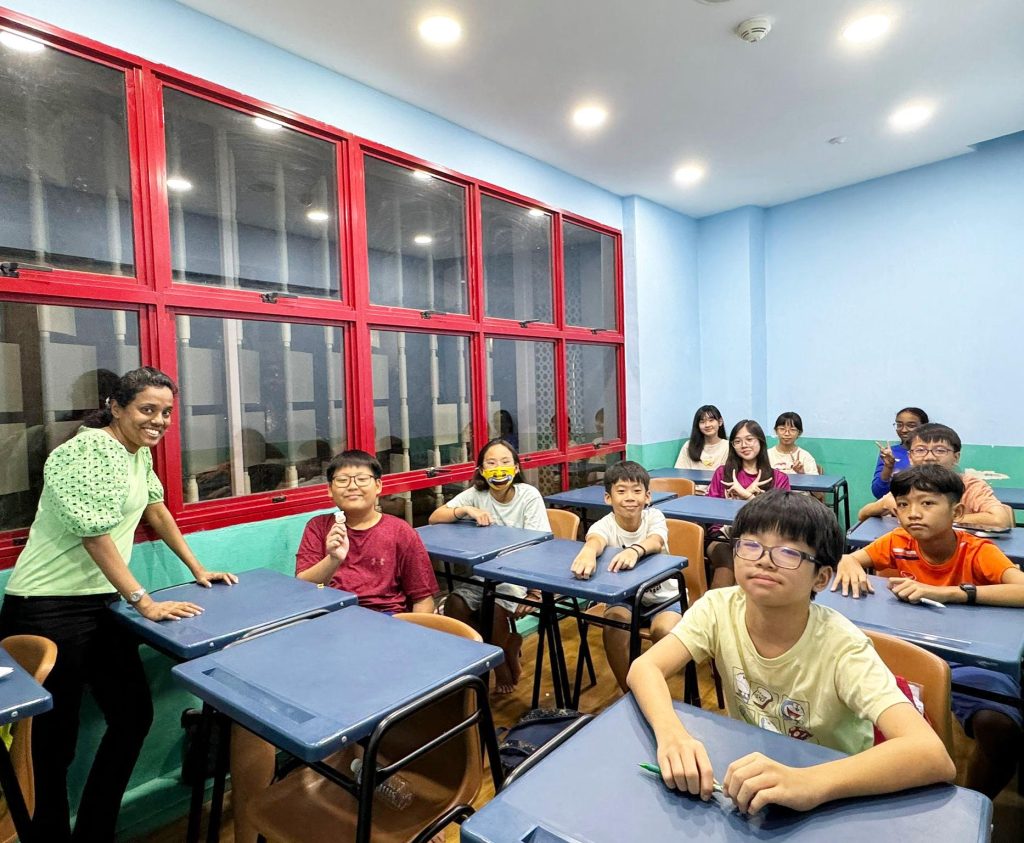
At BrightMinds Education, we recognise that reducing careless mistakes requires more than just telling students to be more careful. Our approach at both Woodlands centres is systematic, patient, and tailored to each student’s specific error patterns.
In our small group tuition setting, teachers can observe each student’s working process in real time—something impossible in a large classroom. We notice when a student rushes through reading, struggles with transcription, or skips checking steps. This allows us to provide immediate, specific feedback rather than generic advice.
We also conduct regular error analysis with our students. Rather than simply marking answers wrong, we categorise mistakes and help students see their personal patterns. When a student realises that 80% of their errors are transcription mistakes, they know exactly where to focus their improvement efforts.
Our Woodlands tuition teachers explicitly teach checking strategies as part of the curriculum, not as an afterthought. Students practice the Fresh Eyes Method, Reverse Verification, and Question-Answer Matching until these become automatic habits. We also build in exam simulations where students practice time management and checking under realistic conditions.
Perhaps most importantly, our small group environment means students don’t feel the same anxiety they might in high-pressure settings. As they experience success and build confidence, test anxiety decreases—and with it, the stress-related errors that anxiety causes.
What Parents Can Do at Home
While quality tuition provides structured support, parents play a crucial role in helping children overcome careless mistakes. Here are practical strategies you can implement at home.
Change the Conversation
Stop using the phrase “careless mistake.” Instead, get specific: “I notice you misread the number here” or “It looks like you forgot to include the units.” This specificity helps your child understand exactly what went wrong and how to prevent it next time.
Avoid expressing frustration about these errors, even if you feel it. Children who fear disappointing their parents often become more anxious, which increases rather than decreases mistakes.
Create an Error Log
Help your child maintain a simple log of mistakes across homework and tests. Record the date, subject, type of error, and what caused it. Review this log weekly to identify patterns. When students see their own data, they become more invested in improvement.
Celebrate when certain error types decrease, even if overall marks haven’t changed dramatically yet. Progress in error reduction is progress worth acknowledging.
Practice Under Realistic Conditions
Homework done in front of the television with unlimited time doesn’t prepare students for exam conditions. Regularly have your child complete work under timed conditions in a quiet environment. This builds the focus and time management skills that prevent rushed errors during actual exams.
Start with shorter timed sessions and gradually extend duration as your child’s stamina improves.
Build Checking Habits Daily
Don’t reserve checking practice for exam preparation. Every homework assignment is an opportunity to practice checking techniques. Require your child to apply at least one checking strategy before considering their work complete.
Initially, this will feel slow and tedious. With consistent practice, it becomes automatic—exactly what you want.
Prioritise Sleep and Wellbeing
Academic performance is built on a foundation of physical health. Ensure your child gets adequate sleep (9-11 hours for primary school children), eats regular nutritious meals, and has time for physical activity and relaxation. A well-rested, healthy child makes fewer errors than one running on insufficient sleep and excessive stress.
Model Mistake-Friendly Attitudes
Let your child see you make and correct mistakes gracefully. Talk about errors as learning opportunities rather than failures. When children see that mistakes are normal and fixable, they’re less likely to panic when they occur—and less likely to make anxiety-driven errors in the first place.
When to Seek Additional Support
If your child’s error patterns persist despite consistent effort at home, it may be time to seek additional help. Quality primary school tuition in Woodlands can provide the structured practice, expert observation, and targeted feedback that’s difficult to replicate at home.
Signs that additional support might help include error rates that aren’t improving over time, anxiety that spikes during tests despite preparation, difficulty applying checking strategies independently, and frustration or declining motivation around schoolwork.
A good tuition centre will assess your child’s specific needs and create a plan that addresses their particular challenges. At BrightMinds Education, our initial consultations focus on understanding each student’s unique patterns and goals before recommending a programme.
Conclusion: Progress Over Perfection
Eliminating careless mistakes entirely isn’t a realistic goal—even adults make occasional errors. The goal is reducing these mistakes to a level where they no longer significantly impact your child’s performance and confidence.
This takes time, patience, and consistent effort. But with the right strategies—understanding the types of errors, addressing root causes, implementing specific checking techniques, and building mindful focus—meaningful improvement is absolutely achievable.
Every child who has walked through the doors of our Woodlands tuition centres arrived with their own pattern of mistakes. With targeted support and practice, we’ve watched these patterns shift and fade, replaced by growing confidence and improving results.
If your child is struggling with persistent mistakes and you’re looking for structured support in the Woodlands, Admiralty, or Sembawang area, BrightMinds Education is here to help. Our experienced teachers, small group format, and systematic approach to error reduction have helped many families just like yours.
Ready to help your child overcome careless mistakes? Contact us today to schedule a consultation and learn how we can support your child’s journey to greater accuracy and confidence.
📍 Visit us at: Blk 883 Woodlands North Plaza St 82 #02-464 S730883 — Call 6363-0180 Blk 763 Woodlands Ave 6 #01-70 S730763 — Call 6366-6865
📱 WhatsApp: https://wa.me/6591474941 📧 Email: Brightmindscentre@gmail.com 🌐 Website: https://brightmindsedu.com/contact-us/
Opening Hours: Mondays to Fridays 4–9.30pm, Saturdays 9am–5pm (Woodlands North Plaza) / 9am–4pm (Woodlands Ave 6). Closed on Sundays and Public Holidays.