
Primary 3 & 4 Tuition in Woodlands: Building Strong Foundations Early
Introduction
As a parent in Woodlands, you have probably noticed something happening around the time your child enters Primary 3. Suddenly, the homework becomes more challenging. The simple addition and subtraction problems transform into multi-step word problems. English compositions require more structure and creativity. Science introduces abstract concepts that demand deeper understanding. If you have found yourself wondering whether your child needs extra academic support, you are not alone.
Primary school tuition in Woodlands has become increasingly popular among parents who recognise that Primary 3 and 4 represent a crucial turning point in their child’s education. These middle primary years serve as the bridge between the foundational concepts taught in Primary 1 and 2 and the examination-focused curriculum of Primary 5 and 6. What happens during these two years often determines how well-prepared your child will be for the PSLE.
This comprehensive guide explores why building strong academic foundations during Primary 3 and 4 is essential, how to identify when your child might benefit from tuition in Woodlands, and what you should look for when choosing the right tuition centre for your family. Whether your child is thriving and you want to keep them ahead, or you have noticed some struggles that concern you, understanding these critical years will help you make informed decisions about your child’s education.
Why Primary 3 and 4 Are Critical Years in Singapore’s Education System
The Singapore Ministry of Education (MOE) designs the primary school curriculum with a clear progression in mind. Primary 1 and 2 focus on building basic literacy and numeracy skills. Children learn to read, write simple sentences, and perform fundamental mathematical operations. The learning environment is nurturing and exploratory, with less emphasis on examinations.
However, everything changes when students enter Primary 3. The curriculum complexity increases significantly across all subjects. In Mathematics, students move from straightforward calculations to problem sums that require multiple steps and logical reasoning. English transitions from simple comprehension passages to more sophisticated texts that test inference and evaluation skills. Science is introduced as a formal subject, requiring students to understand concepts they cannot directly observe.
Primary 4 builds upon this foundation with even greater demands. Students encounter more complex mathematical concepts, including fractions, decimals, and ratios. English compositions require proper paragraph structure, varied vocabulary, and coherent storylines. Science delves deeper into topics like the human body systems, matter, and energy. For many students in Woodlands and across Singapore, this is when academic struggles first become apparent.
What makes these years particularly important is the cumulative nature of learning. Unlike some subjects where topics are relatively independent, primary school Mathematics, English, Science, and Chinese build upon previously taught concepts. A student who does not fully grasp fractions in Primary 4 will struggle with ratios and percentages in Primary 5. A child who has not developed strong reading comprehension skills will find it increasingly difficult to tackle the sophisticated passages in upper primary.
Research in educational psychology consistently shows that learning gaps, if not addressed early, tend to widen over time. A small gap in Primary 3 can become a significant disadvantage by Primary 6. This is why many parents in the Woodlands, Admiralty, and Sembawang areas choose to enrol their children in tuition programmes during these foundational years rather than waiting until problems become severe.
Common Learning Gaps That Develop During Primary 3 and 4
Understanding the specific areas where students commonly struggle can help you identify potential issues early. Here are the most frequent learning gaps that develop during these critical years.
Mathematics Challenges
The transition from basic arithmetic to problem-solving represents the biggest hurdle for many students. In Primary 3 and 4, children must learn to decode word problems, identify what mathematical operations are required, and execute multi-step solutions. Many students can perform calculations correctly but struggle to understand what a question is actually asking.
Fractions present another common challenge. Moving from whole numbers to parts of wholes requires a conceptual shift that some children find difficult. Adding and subtracting fractions with different denominators, understanding equivalent fractions, and applying fraction concepts to word problems are areas where gaps frequently develop.
Model drawing, a key problem-solving technique in Singapore Mathematics, also requires significant practice to master. Students need to visualise mathematical relationships and translate them into diagrams before solving. Without proper guidance and practice, many students never develop confidence with this essential skill.
English Language Difficulties
Primary 3 and 4 English demands much more than basic reading and writing. Comprehension passages become longer and more complex, requiring students to make inferences, identify the author’s purpose, and understand vocabulary in context. Many children can read the words but struggle to extract deeper meaning from texts.
Composition writing undergoes a significant transformation during these years. Students must write structured narratives with a proper introduction, rising action, climax, and resolution. They need to show rather than tell, use varied sentence structures, and incorporate descriptive language. For students who have not developed strong writing foundations, composition becomes a source of anxiety and frustration.
Grammar concepts also become more sophisticated. Students encounter tenses, subject-verb agreement, direct and indirect speech, and synthesis and transformation questions. These technical aspects of language require systematic practice to master.
Science Conceptual Struggles
Science is introduced as a formal examination subject in Primary 3, and this transition catches many students off guard. Unlike Mathematics and English, which children have been studying since Primary 1, Science requires learning an entirely new way of thinking about the world.
Students must understand abstract concepts that they cannot directly see or touch, such as the water cycle, food chains, and plant systems. They need to interpret diagrams, analyse experimental data, and explain scientific phenomena using proper terminology. The jump from memorising facts to applying scientific reasoning challenges many students.
Chinese Language Barriers
For students from English-speaking households, Chinese presents unique challenges. Primary 3 and 4 Chinese requires mastery of hundreds of new characters, increasingly complex sentence structures, and composition writing in a language that may not be used regularly at home.
Oral examination preparation also becomes more demanding, requiring students to engage in picture discussions and respond to questions with confidence and fluency. Without consistent practice and support, many students develop negative attitudes toward Chinese that become difficult to reverse.
Signs Your Child May Need Additional Academic Support
Every child develops at their own pace, and occasional struggles are a normal part of learning. However, certain patterns may indicate that your child could benefit from primary school tuition. Recognising these signs early allows for timely intervention before gaps become entrenched.
Academic Warning Signs
- Consistent difficulty completing homework without extensive help
- Declining grades or test scores over two or more terms
- Struggling with concepts that classmates seem to grasp easily
- Frequently asking for the same concepts to be explained repeatedly
- Making careless mistakes due to a weak foundational understanding
- Inability to apply learned concepts to new problems or situations
Behavioural and Emotional Indicators
- Increasing reluctance to go to school or do homework
- Expressing negative self-talk such as “I’m stupid” or “I can’t do this.”
- Avoiding certain subjects or becoming anxious before tests
- Frustration or tears during homework time
- Loss of confidence or motivation in academic work
- Comparing themselves unfavourably to siblings or classmates
If you notice several of these signs persisting over time, it may be worth exploring tuition options in Woodlands. Early intervention is almost always more effective and less stressful than trying to catch up later.
Concerned about your child’s progress in Primary 3 or 4?
Book a free consultation with BrightMinds Education to discuss your child’s needs. WhatsApp us at wa.me/6591474941
The Long-Term Benefits of Starting Tuition Early
Parents sometimes hesitate to enrol their children in tuition during Primary 3 or 4, thinking they should wait until closer to PSLE. However, there are compelling reasons why early intervention delivers better outcomes than last-minute cramming.
Preventing the Snowball Effect
Academic difficulties rarely stay contained to a single topic. A student who struggles with fractions in Primary 4 will find ratio and percentage problems in Primary 5 nearly impossible. Gaps in grammar understanding affect not just English but also Chinese and even Science, where precise language is required in answers. Early tuition addresses problems before they multiply.
Building Confidence and Positive Attitudes
When students receive support early, they experience success rather than repeated failure. This builds confidence and creates positive associations with learning. A child who feels capable in Primary 4 approaches Primary 5 and 6 with enthusiasm rather than dread. The psychological benefits of early intervention are often as important as the academic gains.
Developing Strong Study Habits
Primary 3 and 4 are ideal years for establishing effective study routines. Students have enough maturity to benefit from structured learning but are not yet under the intense pressure of PSLE preparation. Regular tuition sessions help children develop discipline, time management, and independent learning skills that serve them throughout their education.
Reducing PSLE Stress
Students who enter Primary 5 with strong foundations face significantly less stress during PSLE preparation. Instead of scrambling to fill gaps while learning new content, they can focus on refining their skills and mastering examination techniques. Parents who invest in tuition during Primary 3 and 4 often find that Primary 6 is much more manageable for the entire family.
Creating Time for Balanced Development
When academic foundations are solid, students do not need to spend every waking hour studying during their PSLE year. They have time for co-curricular activities, hobbies, family time, and rest. Early intervention during the lower primary years actually creates more balance in the long run, not less.
What to Look for in Quality Primary School Tuition
Not all tuition centres are created equal. When searching for primary school tuition in Woodlands, consider these factors to ensure you find a programme that genuinely helps your child.
Small Class Sizes
The primary advantage of tuition over regular school is personalised attention. If your child sits in another large class of 30 or more students, they may not receive the individual help they need. Look for tuition centres that maintain small group sizes, allowing teachers to identify each student’s strengths and weaknesses and tailor instruction accordingly.
Small groups also create a more comfortable learning environment where students feel safe asking questions and making mistakes. This is particularly important for Primary 3 and 4 students who are still developing their confidence as learners.
Experienced and Specialised Teachers
Teachers who specialise in specific subjects and levels understand the common misconceptions students have and the most effective ways to address them. They are familiar with the MOE curriculum, examination formats, and the specific skills students need to develop at each stage.
Ask about teacher qualifications, experience with primary students, and familiarity with local school syllabi. The best tuition teachers do not just know their subjects—they understand how children learn.
Structured Curriculum Aligned with School Syllabus
Effective tuition programmes complement what students learn in school rather than confusing them with different approaches. Look for centres that follow the MOE syllabus closely while providing additional practice, deeper explanations, and exposure to varied question types.
The curriculum should be progressive, building skills systematically over time rather than randomly jumping between topics. Regular assessments should track student progress and inform instructional adjustments.
Convenient Location and Schedule
Consistency is key to benefiting from tuition. If the centre is difficult to reach or the schedule does not fit your family’s routine, attendance will suffer. For Woodlands families, choosing a tuition centre in the neighbourhood reduces travel time and makes regular attendance more sustainable.
Consider factors like proximity to your home or your child’s school, availability of parking, and schedule options that work with your work commitments and your child’s other activities.
Communication with Parents
Good tuition centres keep parents informed about their child’s progress, areas of improvement, and any concerns that arise. Regular feedback helps you support your child’s learning at home and ensures that tuition and homework time are aligned toward the same goals.
Ask about how the centre communicates with parents—whether through written reports, parent-teacher meetings, or ongoing messaging. Transparency about your child’s development is essential.
How Small Group Tuition Helps Build Strong Foundations
When considering tuition options, parents often weigh between private one-to-one tutoring and group classes. Small group tuition offers a middle ground that combines the best elements of both approaches, making it particularly effective for Primary 3 and 4 students.
Personalised Attention Without Isolation
In a small group of 6-10 students, teachers can observe each child’s work, identify individual struggles, and provide targeted guidance. Unlike large classroom settings where struggling students may go unnoticed, small groups ensure that every student receives attention.
At the same time, students benefit from being part of a learning community. They see different approaches to solving problems, learn from their peers’ questions, and develop social skills through collaborative learning. This balance of individual attention and group dynamics creates an optimal learning environment.
Peer Learning and Motivation
Children are naturally motivated by their peers. In a small group setting, students encourage each other, celebrate successes together, and develop healthy academic friendships. Seeing classmates work through challenges normalises struggle as part of learning and reduces the stigma some students feel about needing extra help.
Group discussions also deepen understanding. When students explain concepts to each other or debate different approaches to a problem, they process information more thoroughly than through passive listening alone.
Affordability for Sustained Support
Private tutoring, while beneficial, comes at a premium that many families cannot sustain over several years. Small group tuition provides quality instruction at a more affordable price point, making it possible for parents to invest in their child’s education consistently from Primary 3 through Primary 6 and beyond.
This sustained support is crucial for foundation building. Short-term interventions rarely produce lasting results. Students need time to develop skills, build confidence, and internalise learning strategies—goals that require ongoing guidance rather than sporadic help.
Subject-Specific Strategies for Primary 3 and 4 Success
Each subject presents unique challenges during the Primary 3 and 4 years. Understanding what effective support looks like for each area helps you evaluate whether a tuition programme meets your child’s needs.
Mathematics: From Calculation to Problem-Solving
Quality Primary 3 and 4 Math tuition focuses on developing problem-solving skills, not just drilling calculations. Students should learn to read word problems carefully, identify key information, choose appropriate strategies, and check their work systematically.
Model drawing should be taught as a thinking tool, not just a technique for specific question types. Students who truly understand how to represent mathematical relationships visually can apply this skill flexibly across different problems. Tuition should also address conceptual understanding of fractions, decimals, and their relationships—foundational knowledge that many students struggle with.
English: Building Comprehension and Expression
Effective English tuition develops both receptive and productive language skills. For comprehension, students should learn strategies for different question types—literal, inferential, and evaluative. They should practice identifying context clues for vocabulary questions and structuring answers to score full marks.
Composition development at this level should focus on narrative structure, descriptive language, and show-not-tell techniques. Students benefit from guided planning, drafting, and revision processes that they can eventually apply independently. Grammar instruction should be systematic, ensuring students understand rules rather than just memorising corrections.
Science: Developing Scientific Thinking
Science tuition should go beyond memorisation to develop scientific reasoning. Students need to understand why concepts work, not just what facts to remember. This deeper understanding enables them to apply knowledge to unfamiliar scenarios—a key skill tested in PSLE Science.
Effective programmes also teach students how to interpret diagrams, tables, and experimental data. They help students develop precise scientific vocabulary and practice constructing well-reasoned explanations for open-ended questions.
Chinese: Building Confidence and Fluency
For students who find Chinese challenging, tuition should focus on building positive attitudes alongside academic skills. Systematic character learning, regular reading practice, and supportive oral preparation help students develop confidence in a subject many find daunting.
Composition writing benefits from structured templates and phrase banks that give students tools to express their ideas. Comprehension strategies similar to those used in English help students approach Chinese passages systematically rather than with anxiety.
How BrightMinds Education Supports Primary 3 and 4 Students in Woodlands
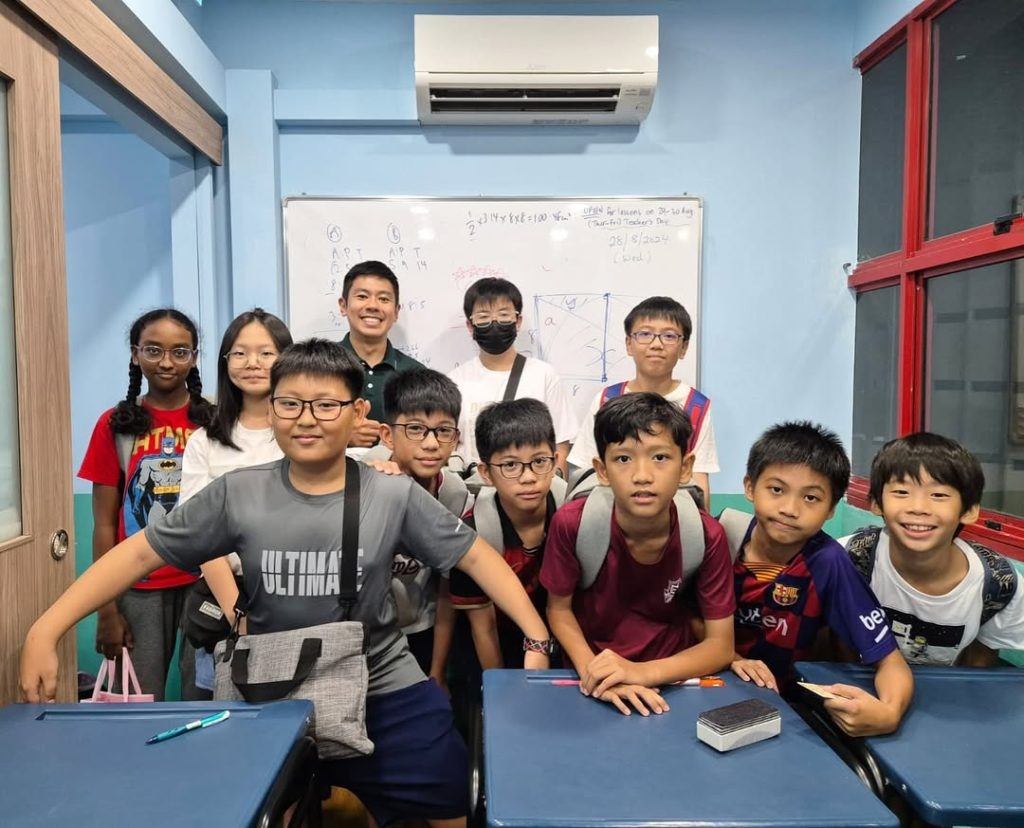
At BrightMinds Education, we understand that Primary 3 and 4 represent a pivotal time in your child’s academic journey. Our tuition programmes are specifically designed to build the strong foundations that students need for long-term success.
Our small group format ensures that every student receives personalised attention while benefiting from peer interaction. Our experienced teachers specialise in primary education and understand the specific challenges students face during these transitional years. We follow the MOE syllabus closely while providing the additional practice and deeper explanations that help concepts truly stick.
Located conveniently in the heart of Woodlands, BrightMinds Education serves families from across the neighbourhood, including Admiralty and Sembawang. Our flexible scheduling options accommodate busy family routines, and our commitment to parent communication means you will always know how your child is progressing.
We offer tuition for English, Mathematics, Science, and Chinese at the Primary 3 to Primary 6 levels, as well as secondary programmes for students continuing their academic journey. Our goal is not just to help students pass examinations but to develop confident, capable learners who approach challenges with resilience and enthusiasm.
Many of our Primary 6 students who go on to achieve excellent PSLE results started with us in Primary 3 or 4. Early enrolment allows us to identify and address learning gaps before they become obstacles, build strong study habits over time, and develop the deep understanding that leads to examination success.
Taking the Next Step for Your Child’s Education
The decision to enrol your child in tuition is an important one, and the timing of that decision matters. Primary 3 and 4 offer a window of opportunity to build foundations, address emerging gaps, and set your child up for success before the pressure of PSLE intensifies.
If you have noticed your child struggling with certain subjects, losing confidence, or simply not reaching their potential, now is the time to act. Early intervention is almost always more effective, less stressful, and more affordable than waiting until problems become severe.
Tuition in Woodlands does not have to mean sacrificing your child’s childhood or adding unbearable stress to your family’s routine. With the right centre, small class sizes, and supportive teachers, tuition can be an enriching experience that builds both academic skills and love of learning.
Your child’s future success starts with the foundations they build today. Do not wait until Primary 5 or 6 to discover gaps that could have been addressed earlier. Take action now to give your child the best possible start.
Ready to Build Your Child’s Strong Academic Foundation?
Register now for our Primary 3 & 4 programmes at BrightMinds Education.
Schedule a free consultation to discuss your child’s needs.
Contact BrightMinds Education
WhatsApp: wa.me/6591474941
Website: brightmindsedu.com/contact-us
Email: Brightmindscentre@gmail.com
Our Locations
Woodlands North Plaza: Blk 883 Woodlands Street 82, #02-464, S730883 Call: 6363-0180 | Hours: Mon-Fri 4 pm-9:30 pm, Sat 10 am-5 pm
Woodlands Ave 6: Blk 763 Woodlands Ave 6, #01-70, S730763 Call: 6366-6865 | Hours: Mon-Fri 4 pm-9:30 pm, Sat 9 am-4 pm
Closed on Sundays and Public Holidays