
Mastering Algebra in Secondary Math: How Woodlands Tuition Simplifies Complex Concepts
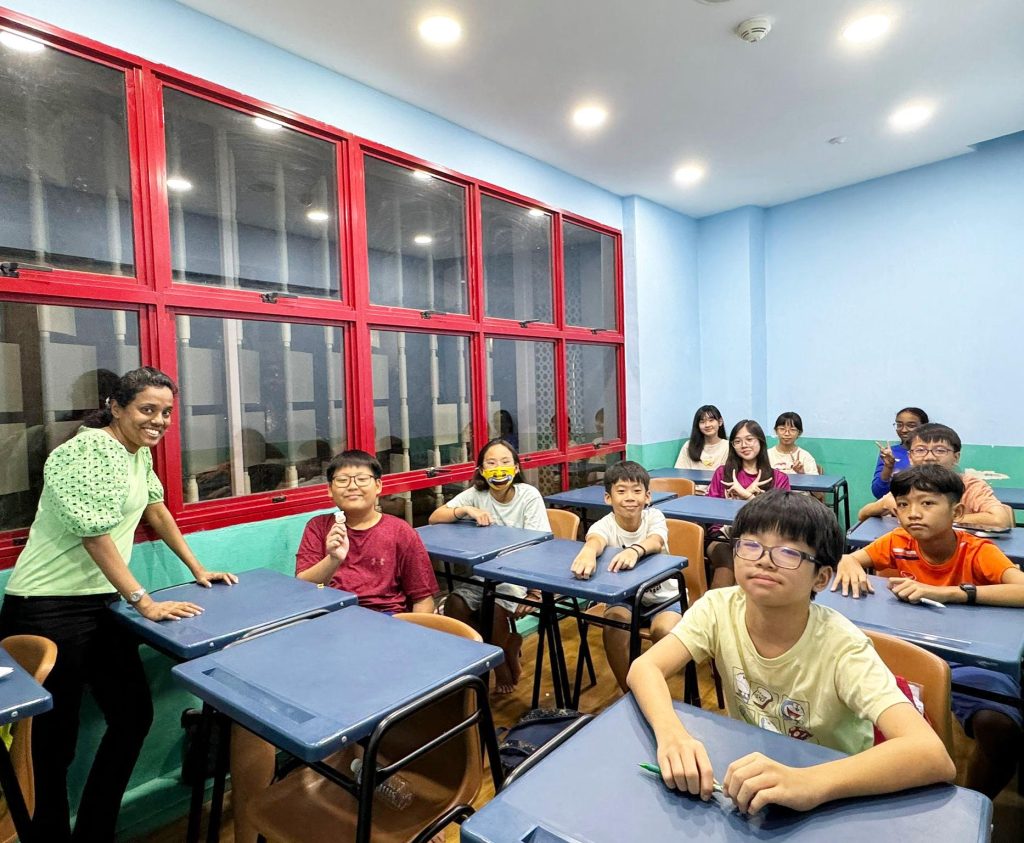
Algebra is often described as the gateway to higher mathematics, and for good reason. It forms the foundation upon which nearly every advanced mathematical concept is built, from trigonometry and coordinate geometry to calculus and beyond. Yet for many secondary school students in Singapore, algebra represents one of the most significant academic hurdles they will face. The transition from concrete arithmetic to abstract algebraic thinking challenges even capable students, and those who struggle with algebra early often find themselves falling further behind as the secondary school years progress.
For parents in Woodlands, Admiralty, and Sembawang, watching a child struggle with algebra can be both frustrating and concerning. The subject appears in virtually every Mathematics examination, and weakness in algebraic skills has a compounding effect on overall mathematical performance. This is why quality E Math tuition in Woodlands has become essential for so many families seeking to give their children the support they need to succeed.
This comprehensive guide explores the nature of algebraic thinking, identifies the most common struggles secondary students face, and explains how effective secondary tuition in Woodlands can transform algebra from a source of anxiety into an area of confidence and competence. Whether your child is just beginning their secondary school journey or preparing for O-Level examinations, understanding these concepts will help you make informed decisions about their mathematical education.
Understanding Why Algebra Is Different from Primary School Mathematics
Before we can address how to master algebra, it is important to understand why so many students find it challenging in the first place. The difficulty with algebra is not simply that the content is harder; it is that algebra requires a fundamentally different way of thinking about mathematics.
The Shift from Concrete to Abstract Thinking
Throughout primary school, mathematics is largely concrete. Students work with specific numbers, solve problems with definite answers, and can often visualise mathematical operations using physical objects or drawings. When a Primary 5 student solves a problem about sharing sweets among friends, they can imagine the actual sweets being distributed.
Algebra changes everything. Suddenly, students are asked to work with letters that represent unknown or variable quantities. The expression “3x + 5” does not have a single answer; its value depends on what x represents. This abstraction is a cognitive leap that many students find disorienting. They are accustomed to mathematics having clear, definite answers, and the introduction of variables challenges this fundamental expectation.
Quality secondary tuition in Woodlands recognises this transition and provides explicit instruction in abstract thinking. Rather than assuming students will naturally adapt to algebraic reasoning, effective tutors guide students through the conceptual shift, using concrete examples to build bridges to abstract understanding.
The Importance of Symbolic Manipulation
Another key difference in algebra is the emphasis on symbolic manipulation. Students must learn to treat algebraic expressions as objects that can be transformed according to specific rules. They must understand that “2(x + 3)” and “2x + 6” are equivalent expressions, and they must be able to move fluently between different forms.
This symbolic fluency does not come naturally to most students. It requires extensive practice and, crucially, a deep understanding of why the rules of algebraic manipulation work. Students who merely memorise procedures without understanding often make errors when faced with unfamiliar problem types. E Math tuition in Woodlands that emphasises conceptual understanding alongside procedural practice produces students who can adapt their skills to new situations.
Building on Primary School Foundations
While algebra introduces new ways of thinking, it also builds heavily on primary school mathematics. Students who have gaps in their understanding of fractions, decimals, percentages, or basic number operations often find these gaps magnified when they encounter algebra. A student who is uncertain about how to work with negative numbers, for example, will struggle enormously with algebraic expressions involving subtraction and negative coefficients.
Effective E Math tuition in Woodlands begins by assessing each student’s foundational knowledge and addressing any gaps before they become barriers to algebraic learning. This diagnostic approach ensures that students have the prerequisites they need to succeed with more advanced content.
Common Algebraic Struggles Among Secondary Students in Singapore
Having worked with countless secondary students in Woodlands and the surrounding areas, experienced tutors have identified several recurring struggles that prevent students from mastering algebra. Understanding these common difficulties helps parents recognise when their child needs support and helps tutors target their instruction effectively.
Struggle 1: Understanding What Variables Actually Represent
One of the most fundamental struggles students face is understanding what variables mean. Many students treat letters in algebraic expressions as mysterious symbols to be manipulated according to rules they do not fully understand. They may be able to follow procedures mechanically but become lost when asked to explain what they are doing or when faced with problems that require genuine understanding.
For example, when asked to solve “x + 5 = 12,” a student might correctly determine that x = 7 without truly understanding that x represents an unknown number that, when added to 5, gives 12. This superficial understanding becomes problematic when problems become more complex or when algebra is applied to real-world situations.
Secondary tuition in Woodlands that emphasises conceptual understanding helps students develop a genuine grasp of variables. Tutors use concrete examples, visual representations, and verbal explanations to ensure students understand not just how to manipulate symbols but what those symbols actually mean.
Struggle 2: Translating Word Problems into Algebraic Expressions
The ability to translate word problems into algebraic expressions and equations is one of the most valuable skills in mathematics, yet it is also one of the most challenging for students to develop. Many students who can competently solve algebraic equations struggle enormously when asked to set up those equations from a word problem.
This translation skill requires students to identify the unknown quantity, recognise the relationships described in the problem, and express those relationships using algebraic notation. Each of these steps presents opportunities for error, and students often become overwhelmed by the complexity of the task.
Consider a typical word problem: “John has three times as many marbles as Peter. Together, they have 48 marbles. How many marbles does Peter have?” To solve this problem algebraically, a student must recognise that if Peter has x marbles, John has 3x marbles, and together they have x + 3x = 48 marbles. Each step in this reasoning process requires understanding and practice.
Quality E Math tuition in Woodlands provides systematic instruction in problem translation. Tutors teach students to identify key words and phrases, to define variables clearly, and to build equations step by step. With practice, this skill becomes increasingly natural.
Struggle 3: Working with Negative Numbers and Signs
Negative numbers cause more algebraic errors than almost any other concept. Students frequently make sign errors when expanding brackets, collecting like terms, or solving equations. The rules for multiplying and dividing negative numbers, while straightforward in isolation, become confusing when embedded in complex algebraic expressions.
Consider the expression “-3(x – 4).” To expand this correctly, students must remember that negative three multiplied by negative four gives positive twelve, resulting in “-3x + 12.” Many students incorrectly write “-3x – 12,” forgetting the sign change that occurs when multiplying two negative quantities.
These errors are often described as “careless mistakes,” but this characterisation is misleading. Sign errors typically result from incomplete understanding or insufficient practice, not from carelessness. Secondary tuition in Woodlands addresses sign errors by reinforcing the underlying concepts and providing extensive practice with problems specifically designed to develop fluency with negative numbers.
Struggle 4: Solving Equations Systematically
Solving algebraic equations requires a systematic approach: performing the same operation on both sides of the equation to isolate the unknown variable. While this principle is simple to state, many students struggle to apply it consistently, particularly when equations involve fractions, brackets, or multiple steps.
Common errors include performing operations on only one side of the equation, choosing inefficient sequences of operations, and making arithmetic errors during the solution process. Students may also struggle with equations that have the variable on both sides or equations that require multiple steps to solve.
E Math tuition in Woodlands teaches equation-solving as a systematic process. Tutors demonstrate clear, organised methods for approaching different equation types and help students develop the habit of checking their solutions by substituting back into the original equation.
Struggle 5: Understanding and Applying Algebraic Identities
As students progress through secondary mathematics, they encounter algebraic identities such as the perfect square identities, the difference of squares, and various factorisation patterns. These identities are powerful tools that simplify complex algebraic work, but many students struggle to recognise when and how to apply them.
For example, the expression “x² – 9” can be factorised as “(x + 3)(x – 3)” using the difference of squares identity. Students who do not recognise this pattern may attempt to factorise through trial and error or may fail to simplify the expression at all. Similarly, recognising that “x² + 6x + 9” is a perfect square that can be written as “(x + 3)²” requires familiarity with the perfect square pattern.
Quality secondary tuition in Woodlands ensures students not only learn these identities but also understand why they work and can recognise opportunities to apply them. This understanding transforms algebraic manipulation from a collection of arbitrary rules into a coherent system of logical relationships.
Is your child struggling with algebra? BrightMinds Education offers expert E Math tuition in Woodlands with small group classes that provide personalised attention. Our experienced tutors specialise in breaking down complex algebraic concepts into manageable steps. WhatsApp us at https://wa.me/6591474941 to book a trial class today.
How Effective Tuition Transforms Algebraic Understanding
Understanding the common struggles is only the first step. The real question for parents in Woodlands is how quality tuition can address these struggles and help their child develop genuine algebraic competence. Effective E Math tuition employs specific strategies that have been proven to accelerate algebraic learning.
Strategy 1: Building Conceptual Understanding Before Procedural Fluency
One of the key differences between effective and ineffective mathematics instruction is the balance between conceptual understanding and procedural fluency. While both are important, research consistently shows that conceptual understanding should precede procedural practice. Students who understand why algebraic methods work are better able to apply those methods flexibly and are less likely to make errors.
Quality secondary tuition in Woodlands invests time in building conceptual understanding. Before teaching students how to solve linear equations, for example, effective tutors ensure students understand what an equation represents and why the balance principle works. This foundational understanding makes subsequent procedural learning more meaningful and more durable.
Strategy 2: Using Multiple Representations
Algebraic concepts can be represented in multiple ways: symbolically, graphically, numerically, and verbally. Students who can move fluently between these representations develop a deeper understanding than those who work only with symbols. A student who understands that the equation “y = 2x + 3” describes a straight line, who can generate a table of values satisfying the equation, and who can explain in words what the equation means has a much richer understanding than one who can only manipulate the symbols.
E Math tuition in Woodlands that employs multiple representations helps students develop this rich understanding. Tutors use graphs, tables, diagrams, and verbal explanations alongside symbolic manipulation, helping students see algebra as a coherent system rather than a collection of disconnected procedures.
Strategy 3: Providing Scaffolded Practice
Learning algebra requires extensive practice, but not all practice is equally effective. Simply assigning large numbers of similar problems can lead to mindless repetition without genuine learning. Effective practice is scaffolded: it begins with supported examples, gradually removes support as competence develops, and increases in complexity at an appropriate pace.
Quality secondary tuition in Woodlands provides carefully designed practice sequences. Tutors begin with worked examples that demonstrate clear solution methods, then guide students through similar problems with decreasing support, and finally challenge students with problems that require independent application and extension of their skills.
Strategy 4: Addressing Errors Constructively
Errors are an inevitable and valuable part of learning mathematics. The way errors are addressed, however, makes an enormous difference in student learning. Simply marking answers as wrong and moving on does little to help students improve. Effective instruction treats errors as opportunities for learning, helping students understand why their approach was incorrect and how to avoid similar errors in the future.
E Math tuition in Woodlands that emphasises constructive error analysis helps students develop metacognitive awareness: the ability to monitor their own thinking and catch errors before they become habits. Tutors work with students to identify patterns in their errors and develop strategies for self-correction.
Strategy 5: Connecting Algebra to Real-World Applications
While algebra is abstract, it has countless real-world applications. Helping students see these connections can increase motivation and deepen understanding. When students understand that algebra is used in everything from calculating mobile phone plans to designing buildings, they are more likely to see the subject as relevant and worthwhile.
Quality secondary tuition in Woodlands incorporates real-world applications into algebraic instruction. Tutors use examples drawn from everyday life, from other school subjects, and from potential career paths to help students see algebra as a powerful tool for understanding the world around them.
Key Algebraic Topics in Secondary Mathematics
The secondary mathematics curriculum covers a wide range of algebraic topics, each building on previous learning. Understanding the scope of algebraic content helps parents appreciate the importance of consistent support throughout the secondary school years.
Lower Secondary: Building the Foundation
In Secondary 1 and 2, students encounter the foundational concepts of algebra. They learn to use letters to represent unknown quantities, to evaluate algebraic expressions, and to simplify expressions by collecting like terms. They also learn to solve simple linear equations and to translate word problems into algebraic form.
These foundational skills are critical. Students who master lower secondary algebra are well-prepared for the more advanced content that follows. Those who develop gaps or misconceptions at this stage often struggle increasingly as they progress through secondary school.
Secondary tuition in Woodlands that begins in lower secondary can prevent these gaps from developing. Early intervention is far more effective than attempting to address foundational weaknesses while simultaneously learning advanced content.
Upper Secondary E Math: Expanding and Deepening
In Secondary 3 and 4, Elementary Mathematics expands and deepens algebraic content. Students learn to work with algebraic fractions, to solve quadratic equations using various methods, and to work with simultaneous equations. They also encounter algebraic manipulation in the context of other topics such as coordinate geometry and functions.
The algebraic content in upper secondary E Math is both more complex and more demanding than lower secondary work. Students must not only learn new techniques but must also apply their algebraic skills with greater fluency and accuracy. The O-Level examination tests algebraic competence extensively, and weakness in algebra almost inevitably impacts overall examination performance.
E Math tuition in Woodlands for upper secondary students focuses on both expanding knowledge and consolidating foundational skills. Tutors ensure students can handle the increased complexity of upper secondary content while addressing any lingering weaknesses from earlier years.
Additional Mathematics: Algebra at a Higher Level
For students taking Additional Mathematics, algebraic demands increase significantly. A Math topics such as polynomials, partial fractions, and binomial expansion require sophisticated algebraic manipulation. The subject also uses algebra as a tool for calculus, requiring students to manipulate expressions fluently in the context of differentiation and integration.
Students who are strong in E Math algebra often find the transition to A Math challenging. The increased abstraction and the higher expectations for fluency require dedicated practice and support. Quality A Math tuition in Woodlands builds on E Math foundations while developing the additional skills required for success in this demanding subject.
The Small Group Advantage for Learning Algebra
While algebra can be studied independently or in large classroom settings, small group tuition offers distinct advantages for developing algebraic competence. Understanding these advantages helps parents in Woodlands make informed decisions about their child’s mathematical education.
Personalised Attention to Individual Struggles
Every student has a unique profile of algebraic strengths and weaknesses. One student may struggle with sign errors while another finds word problems challenging. In a large classroom, teachers cannot possibly address each student’s individual needs. In a small group setting, tutors can identify and target each student’s specific struggles.
Quality E Math tuition in Woodlands maintains small class sizes precisely to enable this personalised attention. Tutors can observe each student’s work, identify error patterns, and provide targeted feedback and instruction. This individualised approach accelerates learning and prevents struggles from becoming entrenched.
Immediate Feedback and Correction
When students make algebraic errors, immediate feedback is far more effective than delayed correction. A student who discovers an error while the problem is still fresh in their mind can understand and correct the mistake. A student who receives feedback days later may not even remember their thinking process.
Small group tuition provides opportunities for immediate feedback that are simply not available in larger settings. Tutors can circulate during practice, observe student work in real-time, and provide corrections and explanations while the learning is occurring. This immediacy dramatically increases the effectiveness of practice.
Peer Learning and Discussion
While personalised attention is valuable, learning from peers also contributes to mathematical development. When students discuss problems with classmates, explain their reasoning, and hear alternative approaches, they deepen their own understanding. The social aspect of small group learning can also increase motivation and engagement.
Secondary tuition in Woodlands that employs small group formats harnesses the benefits of peer learning while maintaining the personalised attention that larger groups cannot provide. Students learn from both their tutor and their classmates, benefiting from multiple perspectives on algebraic problems.
What Parents Can Do to Support Algebraic Learning at Home
While quality E Math tuition in Woodlands provides essential academic support, parents play a crucial role in reinforcing algebraic learning at home. Even parents who do not feel confident in their own mathematical abilities can support their child’s algebraic development in meaningful ways.
Create a Supportive Environment for Mathematics
Many students develop negative attitudes toward mathematics based on messages they receive from adults. Comments like “I was never good at math” or “algebra is just something you have to get through” can undermine student motivation and confidence. Parents who communicate that mathematics is valuable and achievable, even when challenging, help their children develop productive attitudes.
Creating a supportive environment also means providing appropriate study space and time. Algebra requires focused concentration, and students need quiet, organised spaces where they can work without distraction. Establishing regular study routines helps students develop the consistent practice habits that algebraic mastery requires.
Encourage Process Over Outcomes
When discussing mathematics with your child, focus on the process of problem-solving rather than just the final answer. Ask questions like “How did you approach this problem?” or “What strategy did you use?” rather than simply checking whether the answer is correct. This emphasis on process helps students develop metacognitive awareness and encourages them to think about their own thinking.
When your child makes errors, respond with curiosity rather than frustration. Ask what they were thinking and help them see errors as opportunities for learning rather than failures to be ashamed of. This growth mindset approach has been shown to significantly impact mathematical achievement.
Communicate with Tuition Teachers
The best outcomes occur when parents and tutors work together to support student learning. Stay in regular communication with your child’s tuition centre about their progress, their struggles, and strategies you can use at home to reinforce learning. Quality tuition centres in Woodlands welcome this partnership and can provide specific guidance for supporting your child’s algebraic development.
How BrightMinds Education Approaches Algebra Instruction
At BrightMinds Education, we have developed our approach to algebra instruction based on years of experience working with secondary students in Woodlands and the surrounding neighbourhoods. Our methods are designed to address the specific struggles that Singapore students face and to build both understanding and fluency.
Our experienced teachers specialise in secondary mathematics and understand the MOE syllabus thoroughly. They know exactly what O-Level examiners are looking for and prepare students not just for content knowledge but for the specific demands of examination questions. This focused expertise makes a significant difference in student outcomes.
Our small group format ensures that every student receives the attention they need. With small class sizes, our tutors can identify individual struggles, provide personalised feedback, and adapt instruction to meet each student’s needs. Students benefit from both expert instruction and peer learning in an environment that balances support with challenge.
Located conveniently in the Woodlands heartland, we serve families throughout Woodlands, Admiralty, and Sembawang. Our neighbourhood presence means shorter travel times for students, leaving more energy for actual learning. We understand the local school context and can provide relevant, targeted support for students from schools in our community.
Conclusion
Algebra represents one of the most significant academic challenges that secondary students face, but it is also one of the most important subjects for future success. Students who develop strong algebraic skills open doors to advanced mathematics, science, and countless career paths. Those who struggle with algebra often find their options limited and their confidence undermined.
The good news is that algebraic competence can be developed with the right support. Quality E Math tuition in Woodlands provides the conceptual instruction, scaffolded practice, and personalised attention that students need to transform their relationship with algebra. Whether your child is just beginning to struggle or has been falling behind for some time, effective tuition can make a meaningful difference.
For families in Woodlands, Admiralty, and Sembawang, investing in quality secondary tuition is an investment in your child’s future. The algebraic skills developed now will serve them not just in upcoming examinations but throughout their educational journey and beyond. With the right support, every student can develop the algebraic thinking skills they need to succeed.
Take the First Step Toward Algebraic Confidence
Is your child struggling with algebra? Don’t wait for small difficulties to become major obstacles.
BrightMinds Education offers expert E Math tuition in Woodlands with small group classes that provide the personalised attention your child needs. Our experienced tutors specialise in breaking down complex algebraic concepts and building genuine understanding.
Register now for our upcoming programmes and give your child the support they need to succeed.
Contact BrightMinds Education:
- WhatsApp: https://wa.me/6591474941
- Email: Brightmindscentre@gmail.com
- Website: https://brightmindsedu.com/contact-us/
Our Locations:
- Woodlands North Plaza: Blk 883 Woodlands St 82 #02-464 S730883 | Call: 6363-0180
- Woodlands Ave 6: Blk 763 Woodlands Ave 6 #01-70 S730763 | Call: 6366-6865
- Opening Hours: Mon-Fri 4 pm-9:30 pm | Sat 9 am-5 pm | Closed Sun & PH