
Effective Homework Strategies: How Woodlands Tuition Teaches Independent Learning
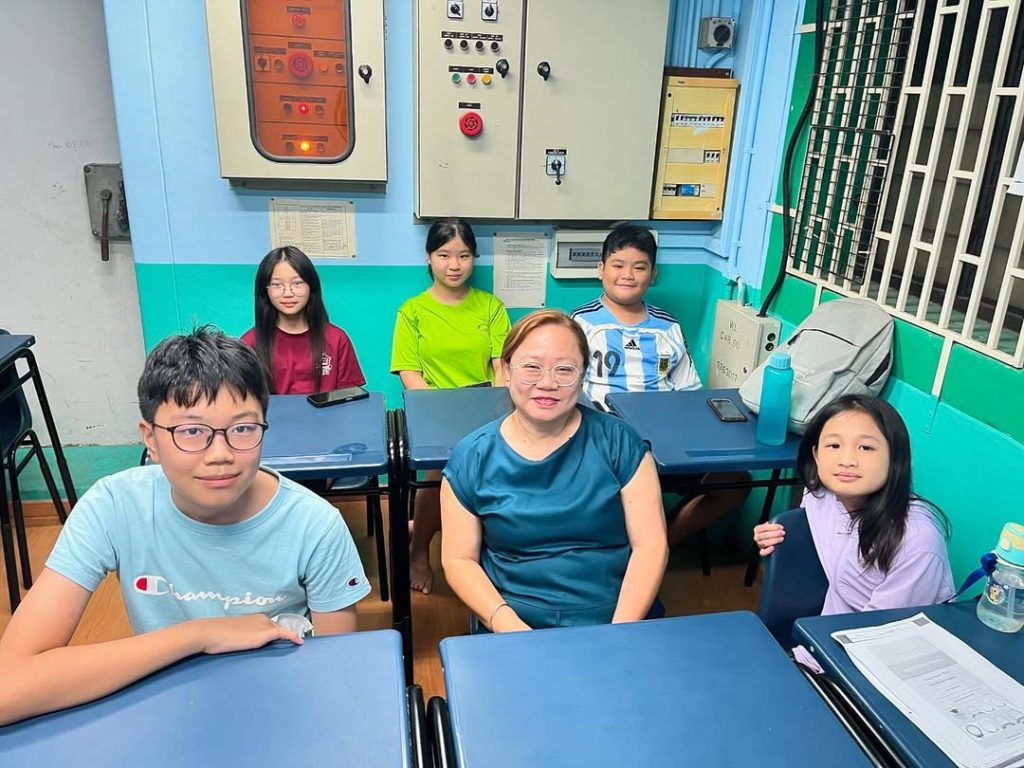
Every evening in homes across Woodlands, Admiralty, and Sembawang, a familiar scene unfolds. Children sit at tables surrounded by worksheets and textbooks while parents hover nearby, ready to help, prompt, or sometimes complete homework alongside their struggling child. What should be an opportunity for independent practice and learning becomes a nightly battle of wills, a source of family stress, and an exercise in dependence rather than independence.
The homework struggle is real, and it affects families regardless of their child’s academic ability. High-achieving students may rush through homework carelessly, missing the learning opportunity it provides. Struggling students may sit paralysed, unable to start without constant guidance. And many students fall somewhere in between, capable of completing work but lacking the self-management skills to do so efficiently and effectively.
The true purpose of homework extends far beyond completing assigned tasks. Homework should develop independent learning skills that students will need throughout their education and into their adult lives. The ability to manage time, work without supervision, persevere through challenges, and take responsibility for one’s own learning are skills that matter far more than any individual worksheet. Yet these skills are often neglected in the rush to simply get homework done.
Quality primary school tuition in Woodlands recognises that teaching students how to learn independently is as important as teaching academic content. This guide explores how effective tuition develops homework habits and self-study skills, and provides practical strategies that parents can reinforce at home. The goal is not just completed homework but confident, capable students who can manage their own learning.
Why Independent Learning Skills Matter
Before examining specific strategies, it is worth understanding why independent learning skills are so crucial for your child’s long-term success.
The Limitations of Dependent Learning
Students who rely heavily on parents, tutors, or teachers to guide them through every academic task may achieve good grades in the short term, but they develop a fragile form of competence. They can perform when supported but struggle when left to their own resources. This dependence becomes increasingly problematic as students progress through school.
In primary school, dependent learners may manage adequately because parents can still help with most subjects and homework loads are manageable. But as students enter secondary school, the volume of work increases dramatically while the curriculum extends beyond what many parents can assist with. Students who have not developed independent study skills find themselves overwhelmed precisely when they most need to manage their own learning.
The ultimate test comes during examinations, when students must perform entirely on their own. A student who has always had someone beside them, prompting them through difficult questions, may panic when facing an examination paper alone. The skills of breaking down problems, managing time, and persevering through difficulty must be developed before they are needed in high-stakes situations.
What Independent Learning Actually Looks Like
Independent learning does not mean learning without any support. Even adult professionals seek help, collaborate with colleagues, and use resources when facing challenges. True independent learning involves knowing when you need help versus when you should persist independently, being able to identify what specifically you do not understand, having strategies for approaching unfamiliar problems, managing your time and attention effectively, and taking responsibility for your own progress.
These are skills that can be explicitly taught and deliberately developed. They do not emerge automatically from simply assigning homework; they require intentional cultivation through the right approaches and environments.
How Quality Tuition Develops Independent Learning
Effective tuition in Woodlands does more than help students complete their immediate assignments. It systematically develops the skills and habits that enable independent learning.
Teaching Problem-Solving Approaches
When a student encounters a difficult homework question, their natural instinct is often to seek immediate help. A dependent learner asks “What’s the answer?” or “How do I do this?” An independent learner asks “What strategies could I try?” and attempts them before seeking assistance.
Quality tutors teach explicit problem-solving approaches that students can apply independently. For Mathematics, this might include strategies like identifying what the question is asking, determining what information is given, considering similar problems they have solved before, and trying multiple approaches when the first attempt fails. For English, it might involve techniques for analysing comprehension questions, planning compositions, or checking their own work for errors.
These strategies are taught not just by telling students what to do but by modelling thinking processes explicitly. When tutors solve problems, they verbalise their reasoning: “I notice this question involves fractions, so I’m thinking about what fraction operations might apply. Let me try…” This think-aloud approach shows students that problem-solving involves systematic reasoning they can replicate, not mysterious insight they either have or lack.
Graduated Release of Responsibility
Effective instruction follows a pattern of gradually transferring responsibility from teacher to student. Initially, the tutor demonstrates and explains while the student observes. Then, the tutor and student work through problems together, with the tutor providing guidance as needed. Next, the student works with the tutor available for support but not actively guiding. Finally, the student works independently while the tutor monitors.
This graduated release ensures that students develop genuine competence rather than superficial familiarity. Primary school tuition in Woodlands that follows this approach produces students who can transfer their learning to new contexts, including homework at home without the tutor present.
The key is resisting the temptation to jump in too quickly when students struggle. Productive struggle, where students work hard on challenging problems before receiving help, develops both skills and resilience. Tutors who immediately provide answers whenever students hesitate may get through more content but develop less independence.
Building Self-Monitoring Skills
Independent learners monitor their own understanding and progress. They recognise when they are confused, identify what specifically is unclear, and seek appropriate help. Dependent learners often do not realise they are confused until they fail a test, or they know something is wrong but cannot articulate what.
Quality tuition develops self-monitoring by regularly asking students to assess their own understanding. “How confident are you about this concept?” “Can you explain this in your own words?” “What part is still unclear?” These questions, asked consistently, train students to pay attention to their own comprehension.
Tutors also teach students to check their own work systematically. Rather than submitting answers and waiting to be told whether they are correct, students learn to verify their solutions, look for common errors, and evaluate whether their answers make sense. This self-checking habit is essential for examination success and for independent homework completion.
Want your child to become a confident, independent learner? BrightMinds Education offers tuition in Woodlands that develops self-study skills alongside academic content. Our approach builds students who can manage their own learning effectively. WhatsApp us at https://wa.me/6591474941 to learn more about our programmes.
Practical Homework Strategies for Students
Beyond general approaches, there are specific strategies that students can use to complete homework more effectively and independently. Quality tuition teaches these strategies explicitly.
Strategy 1: Starting Smart
How a student begins their homework session often determines how productively it goes. Independent learners develop consistent routines for starting homework that set them up for success.
This includes preparing their workspace with all necessary materials before beginning, reviewing all assigned tasks to understand the scope of work, estimating how long each task will take, deciding on an order for completing tasks, and removing distractions like phones or unnecessary devices. Students who dive straight into homework without this preparation often waste time looking for materials, are surprised by the workload, and succumb to distractions more easily.
Tuition in Woodlands can help students develop personalised starting routines that work for their specific needs. Some students work best tackling difficult subjects first when their energy is highest. Others prefer to build momentum with easier tasks before facing challenges. Understanding their own patterns helps students design effective routines.
Strategy 2: Time Management Techniques
Many students have no sense of how long tasks actually take, leading to either rushed work or endless homework sessions. Teaching time awareness and management transforms homework productivity.
Simple techniques like estimating task duration before starting, then comparing the estimate to actual time taken, builds time awareness. Students gradually learn to predict accurately how long their homework will take, which supports better planning and reduces the stress of unexpected time demands.
Structured techniques like the Pomodoro method, where students work in focused blocks with short breaks between them, help maintain concentration. A primary school student might work for twenty minutes then take a five-minute break. This structure is more sustainable than attempting to work for hours without pause, which typically leads to declining focus and increasing frustration.
Strategy 3: Tackling Difficult Questions
Every student encounters homework questions they cannot immediately answer. How they respond to this difficulty determines whether they develop independence or dependence.
Independent learners have a mental checklist for difficult questions. First, they reread the question carefully to ensure they understand what is being asked. Then, they identify what they know that might be relevant. They consider similar questions they have solved before. They attempt a solution even if uncertain, knowing that trying often clarifies thinking. Only after genuine effort do they seek help, and when they do, they can articulate specifically what they have tried and where they are stuck.
Primary school tuition in Woodlands that teaches this approach produces students who can work through difficulty rather than giving up at the first sign of challenge. This resilience is valuable far beyond homework completion.
Strategy 4: Effective Note-Taking and Reference
Students who keep organised notes and know how to use reference materials can solve many problems independently that would otherwise require help. Teaching students to create and use their own learning resources builds lasting independence.
This includes taking notes during lessons and tuition that capture key concepts and methods, organising notes so that relevant information can be found quickly, using textbooks and online resources appropriately to clarify confusion, and building personal reference sheets for frequently needed information like mathematical formulas or grammar rules. Students who develop these habits have resources to draw on when completing homework alone.
The Parent’s Role in Supporting Independence
While tuition develops independent learning skills, parents play a crucial role in reinforcing these skills at home. Understanding how to support without undermining independence helps parents contribute effectively.
Creating the Right Environment
Students need appropriate physical space for homework: a quiet area with good lighting, a clear workspace, and minimal distractions. They also need protected time when homework is the priority, not something squeezed between other activities.
Parents can also create an emotional environment that supports independence. This means communicating confidence in your child’s ability to handle challenges, avoiding jumping in with help at the first sign of struggle, and responding to requests for help by asking “What have you tried?” before providing assistance. The message should be: I am here if you need me, but I believe you can handle this.
Supervising Without Controlling
There is an important distinction between supervising homework and controlling it. Supervision means being aware of what your child is doing, available if needed, and checking that work is completed. Control means sitting beside your child, directing every step, and essentially doing homework with them or for them.
Younger children need more supervision, but even young students can work independently for periods if expectations are clear. As children mature, supervision should gradually decrease while accountability remains. A Primary 6 student should be able to complete most homework independently, with parents checking that work is done rather than monitoring every question.
If your child is highly dependent on your presence for homework, consider whether this dependence has been inadvertently encouraged. Gradually stepping back, while ensuring your child has strategies to work independently, can be uncomfortable initially but builds important skills.
Responding to Struggles Productively
When your child struggles with homework, your response shapes whether they develop resilience or learn to rely on others. Responding productively means acknowledging that the work is challenging without communicating that it is too hard for them, asking questions that guide thinking rather than providing answers, encouraging them to use strategies they have learned, allowing them to experience productive struggle before offering help, and when you do help, explaining reasoning rather than just giving solutions.
It is also acceptable for homework to go uncompleted occasionally if your child genuinely cannot do it. This provides valuable feedback to teachers and tutors about what needs more instruction. Homework that is always completed perfectly, with heavy parent involvement, may mask gaps that need attention.
Building Long-Term Responsibility
Beyond specific homework strategies, independent learning requires students to take responsibility for their own academic progress. This broader responsibility develops gradually through intentional cultivation.
Ownership of Learning
Students who see education as something done to them remain passive. Students who see education as their own responsibility become engaged. Shifting from the first mindset to the second is transformative.
Tuition in Woodlands can foster this shift by involving students in setting their own learning goals, helping them track their own progress, discussing the relevance of what they are learning, and giving them choices where appropriate. When students feel ownership over their learning, homework becomes something they do for themselves rather than something imposed by others.
Parents can reinforce this by asking questions like “What do you want to achieve this term?” and “How will you know if you’re making progress?” rather than simply imposing expectations. This collaborative approach builds intrinsic motivation alongside responsibility.
Learning from Mistakes
Independent learners see mistakes as learning opportunities rather than failures to be ashamed of. This growth mindset is essential for taking on challenges and persevering through difficulty.
When homework or tests reveal errors, the response matters. Focusing on understanding what went wrong and how to improve is productive. Focusing on criticism or disappointment is counterproductive. Students who fear mistakes avoid challenges that might lead to failure, limiting their growth.
Quality tuition creates environments where mistakes are normalised and analysed rather than punished. “That’s a common mistake. Let’s understand why it happens and how to avoid it,” is more valuable than “That’s wrong.” This approach, reinforced by parents, develops students who tackle difficult homework courageously rather than avoiding anything they might get wrong.
How BrightMinds Develops Independent Learners
At BrightMinds Education, we believe that developing independent learning skills is as important as teaching academic content. Our primary school tuition in Woodlands is designed to build students who can manage their own learning effectively.
Our small group format allows tutors to assess each student’s current independence level and provide appropriately graduated support. We explicitly teach problem-solving strategies, self-monitoring skills, and effective study habits. We resist the temptation to simply provide answers, instead guiding students to develop their own competence.
We communicate with parents about how to support independence at home, creating consistency between tuition and home environments. Our goal is students who no longer need us—who have developed the skills and confidence to manage their own academic success.
Located conveniently in Woodlands, we serve families throughout Woodlands, Admiralty, and Sembawang who want their children to become capable, independent learners.
Conclusion
Homework is an opportunity to develop independent learning skills that will serve your child throughout their education and beyond. When approached correctly, it builds time management, problem-solving, self-monitoring, and responsibility. When approached poorly, it creates dependence and stress without lasting benefit.
Quality tuition in Woodlands teaches more than academic content. It explicitly develops the strategies and habits that enable students to work effectively on their own. Combined with parent support that encourages independence rather than dependence, this approach produces students who are confident, capable, and responsible for their own learning.
The goal is not perfect homework every night. The goal is a student who can face academic challenges independently, knowing they have strategies to apply and the resilience to persevere. This independence is the foundation for long-term academic success.
Develop Your Child’s Independent Learning Skills
Help your child become a confident, self-directed learner.
BrightMinds Education offers primary school tuition in Woodlands that builds independent learning skills alongside academic excellence. Our approach develops students who can manage their own homework and learning effectively.
Contact us today to learn how we can help your child develop lasting independence.
Contact BrightMinds Education:
- WhatsApp: https://wa.me/6591474941
- Email: Brightmindscentre@gmail.com
- Website: https://brightmindsedu.com/contact-us/
Our Locations:
- Woodlands North Plaza: Blk 883 Woodlands St 82 #02-464 S730883 | Call: 6363-0180
- Woodlands Ave 6: Blk 763 Woodlands Ave 6 #01-70 S730763 | Call: 6366-6865
- Opening Hours: Mon-Fri 4pm-9:30pm | Sat 9am-5pm | Closed Sun & PH